[算法] LC160, 206, 234 - 相交, 反转和回文链表
三道链表简单题(但是也有不好想的地方)
LC160 - 相交链表
一、题目描述
给你两个单链表的头节点 headA 和 headB ,请你找出并返回两个单链表相交的起始节点。如果两个链表不存在相交节点,返回 null 。
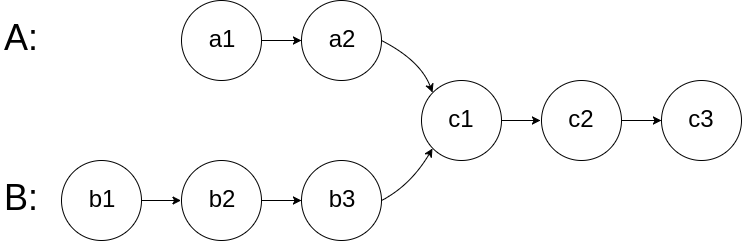
图示两个链表在节点 c1 开始相交
输入 / 输出样例:
输入:intersectVal = 8, listA = [4,1,8,4,5], listB = [5,6,1,8,4,5], skipA = 2, skipB = 3
输出:Intersected at '8'

输入:intersectVal = 2, listA = [1,9,1,2,4], listB = [3,2,4], skipA = 3, skipB = 1
输出:Intersected at '2'

输入:intersectVal = 0, listA = [2,6,4], listB = [1,5], skipA = 3, skipB = 2
输出:No intersection
二、思路
(没有题解来源,因为高赞题解基本没区别)
我原本的想法是写一个 getlen(*L) 函数,先获取 A、B 两个链表的长度,计算其长度之差,然后根据长度差挪动指针,使两个指针对齐。
没想到题解仅用五行就解决了问题:
-
假设 A、B 链表的长度分别为 和 (其中 c 是公共部分)。
-
如果我们尝试组合两个链表,有两种方式,AB 和 BA(即 B 接在 A 后,和 A 接在 B 后),其长度分别为 和 ;
-
我们注意到:;
-
也就是说,如果我们用两个指针,从 A 和 B 的头部开始,分别遍历链表 AB 和链表 BA,在一定能同时到达末尾的同时(因为 AB 和 BA 长度相等),也一定能同时进入最后的公共段 c(因为进入最后的公共段之前,两个指针走过的长度相等)。
所以:
- 我们只需要创建两个指针
aPtr和bPtr,分别从 A、B 的头节点开始遍历; - 当
aPtr遍历到 A 末尾时,跳转到 B 的头部开始遍历; - 当
bPtr遍历到 B 末尾时,跳转到 A 的头部开始遍历; - 两个指针一定能找到相交之点(或最后都为
null)。
三、代码 & 复杂度分析
public class Solution {
    public ListNode getIntersectionNode(ListNode headA, ListNode headB) {
        ListNode aPtr = headA, bPtr = headB;

        while (aPtr != bPtr) {
            aPtr = (aPtr == null) ? headB : aPtr.next;
            bPtr = (bPtr == null) ? headA : bPtr.next;
        }

        return aPtr;
    }
}
ListNode *getIntersectionNode(ListNode *headA, ListNode *headB) {
ListNode *A = headA, *B = headB;
while (A != B) {
A = A != NULL ? A->next : headB;
B = B != NULL ? B->next : headA;
}
return A;
}复杂度分析:
- 时间:最坏的情况下两个链表都要完全遍历,那么时间就是 ;
- 空间:空间复杂度为 ,只需常数级的额外变量。
LC206 - 反转链表
一、题目描述
给你单链表的头节点 head ,请你反转链表,并返回反转后的链表。
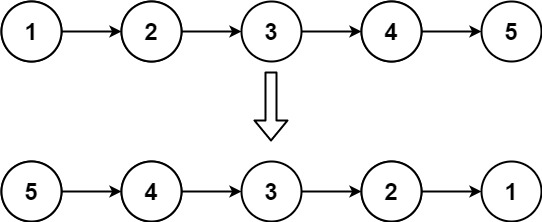
二、思路 & 代码
最简单的问题,无需多言
1. 迭代法
使用三个指针 prev、curr 和 next。
每次循环时,先暂存当前结点的下一个结点,令当前结点指向 prev,然后更新 prev 和 curr(都向后挪一位)。
class Solution {
    public ListNode reverseList(ListNode head) {
        ListNode prev = null, curr = head;

        while (curr != null) {
            ListNode next = curr.next;
            curr.next = prev;
            prev = curr;
            curr = next;
        }

        return prev;
    }
}
struct ListNode* reverseList(struct ListNode* head) {
struct ListNode* prev = NULL;
struct ListNode* curr = head;
while (curr) {
struct ListNode* next = curr->next;
curr->next = prev;
prev = curr;
curr = next;
}
return prev;
}2. 递归法
考虑清楚一个递归问题就是想明白退出条件、子问题和当前层这三件事:
- 退出条件(也就是不再继续深入、开始回溯的条件):指针 p 到达原本的末尾结点,此时的 p 就是新 head;
- 子问题:这个问题的子问题就是“把 p 之后的那部分链表反转好”。在子问题完成之后,
p->next这个链表就已经是反向的了(反转之后p->next是尾节点); - 当前层要做的事:在当前层,只需要调好
p和p->next的连接就行了,即让p->next指向自己,然后让自己指向 null。
class Solution {
    public ListNode reverseList(ListNode head) {
        if (head == null || head.next == null) {
            return head;
        }
        // 反转后,整条链表的新头,值始终不变
        ListNode newHead = reverseList(head.next);

        head.next.next = head;
        head.next = null;

        return newHead;
    }
}
struct ListNode* reverseList(struct ListNode* head) {
if (head == NULL || head->next == NULL) {
return head;
}
struct ListNode* newHead = reverseList(head->next);
head->next->next = head;
head->next = NULL;
return newHead;
}三、复杂度分析
- 迭代法的时间复杂度为 O(n),空间复杂度为 O(1);
- 递归法的时间、空间复杂度均为 O(n)(因为栈区将有 n 个函数入栈)。
LC234 - 回文链表
一、题目描述
给你一个单链表的头节点 head ,请你判断该链表是否为回文链表。如果是,返回 true ;否则,返回 false 。

true
二、思路 & 代码
用快慢指针找到链表的中点,反转链表的后半部分,然后迭代比较链表的前半和反转后的后半。
快慢指针:当快指针 fast 到达末尾时,慢指针 slow 恰好会到达中点处。
这题也可以使用递归,但我不想再研究递归了,感觉不是很有必要
class Solution {
    public boolean isPalindrome(ListNode head) {
        if (head == null || head.next == null) {
            return true;
        }

        ListNode slow = head, fast = head;
        while (fast.next != null && fast.next.next != null) {
            slow = slow.next;
            fast = fast.next.next;
        }

        ListNode sHead = reverseList(slow.next);
        ListNode p1 = head, p2 = sHead;
        boolean result = true;
        while (p2 != null) {
            if (p1.val != p2.val) {
                result = false;
                break;
            }
            p1 = p1.next;
            p2 = p2.next;
        }

        // 将后半部分恢复
        slow.next = reverseList(sHead);
        return result;
    }

    // 反转链表
    private ListNode reverseList(ListNode head) {
        ListNode prev = null, curr = head;

        while (curr != null) {
            ListNode next = curr.next;
            curr.next = prev;
            prev = curr;
            curr = next;
        }

        return prev;
    }
}
struct ListNode* reverseList(struct ListNode* head) {
struct ListNode* prev = NULL;
struct ListNode* curr = head;
while (curr != NULL) {
struct ListNode* next = curr->next;
curr->next = prev;
prev = curr;
curr = next;
}
return prev;
}
bool isPalindrome(struct ListNode* head) {
if (head == NULL || head->next == NULL)
return true;
struct ListNode* slow = head;
struct ListNode* fast = head;
while (fast->next != NULL && fast->next->next != NULL) {
slow = slow->next;
fast = fast->next->next;
}
struct ListNode* sHead = reverseList(slow->next);
struct ListNode* p1 = head;
struct ListNode* p2 = sHead;
bool result = true;
while (p2 != NULL) {
if (p1->val != p2->val) {
result = false;
break;
}
p1 = p1->next;
p2 = p2->next;
}
slow->next = reverseList(sHead);
return result;
}三、复杂度分析
时间:
- 找中点:遍历 N/2 个节点,耗时 ;
- 反转后半部分链表:遍历 N/2 个节点,耗时 ;
- 比较两个链表:最坏情况同样是遍历 N/2 个节点,耗时 ;
- 恢复原链表:;
- 总的时间复杂度是 。
空间:只使用常数级的额外空间,复杂度为 。